
United States Spouse Visa

Deprecated: Function get_the_author_ID is deprecated since version 2.8.0! Use get_the_author_meta('ID') instead. in /var/www/sites/lawfirmbackup_200125/wordpress/wp-includes/functions.php on line 6131
A United States Spouse Visa allows foreign citizens married to a US citizen or a green card holder to legally immigrate to the United States and live there with their spouse. There are two types of spouse visas: CR-1 and IR-1. While the CR-1 visa is for spouses married for less than two years at the time of the visa application and grants conditional permanent resident status for two years, the IR-1 visa is for couples married for a longer period and grants regular permanent resident status (green card) for ten years.
In this article, one of the founding partners of the law office Decker, Pex, Levi, specializing in immigration to the USA, will explain the process of obtaining a spouse visa for the United States and the differences between the various visas.
What is a US Spouse Visa?
A US spouse immigration visa, also known as a marriage visa, allows a foreign national married to a US citizen or permanent resident (green card holder) to enter and reside in the United States until they receive permanent resident status or citizenship. This type of visa is granted to individuals intending to immigrate to the US to be with their spouse. Upon entering the US, the spouse will be issued a green card, as the spouse visa is only a temporary document.
There are two main types of spouse visas: CR-1 (“Conditional Resident”) and IR-1 (“Immediate Relative”). Both visas fall under the “family-based” immigration category, allowing US citizens or green card holders to sponsor their immediate relatives for immigration.
What are the Differences Between CR-1 and IR-1 Spouse Visas?
The primary difference between CR-1 and IR-1 visas is the duration of the marriage at the time of application: while the CR-1 visa is for spouses of US citizens who have been married for less than two years at the time of the visa application, the IR-1 visa is for couples who have been married for more than two years at the time of application.
Other differences include the validity period of the visa and the renewal process of the green card obtained through these visas, as approved by the US Citizenship and Immigration Services (USCIS).
CR-1 Visa
When a foreign spouse enters the US with a CR-1 visa, they receive conditional permanent resident status, which is valid for two years.
Within the 90-day period before the CR-1 visa expires (after two years), the foreign spouse and the US spouse must jointly file a petition to remove the conditional status and receive a new green card, which will be valid for the standard ten years.
IR-1 Visa
Unlike the CR-1 visa, the IR-1 visa leads to the issuance of a regular green card, valid for ten years—without any conditions.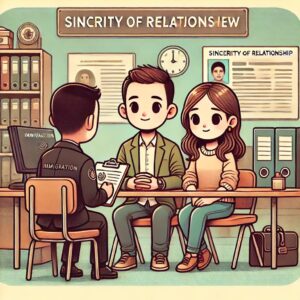
What are the Specific Requirements When Applying for an IR-1 or CR-1 Spouse Visa?
The sponsor of the application must be a U.S. citizen or green card holder who will file an immigration petition (Form I-130) for the foreign spouse. In this process, the sponsor is generally called the “petitioner,” while the foreign spouse is referred to as the “beneficiary.”
- The petitioner must be at least 18 years old.
- The couple must show that they are in fact married by providing a valid marriage certificate.
- The marriage must be genuine: the couple must prove that their marriage is not fraudulent by presenting evidence of a real relationship. Examples of documents proving the relationship includes joint finances, shared residence, photos, flight tickets, and hotel bookings from joint vacations, ongoing communication between the couple (emails, chat logs, or phone call records), and affidavits from family and friends regarding the relationship.
- The sponsoring spouse (the petitioner) must submit an affidavit of support (Form I-864), proving they have sufficient financial resources to support the foreign spouse (the beneficiary) and prevent them from becoming a public charge. This form is a legally binding contract where the sponsor agrees to financially support the beneficiary and any other dependents (minor children) if necessary and declares they will not rely on public assistance.
- The petitioner’s income must meet the minimum income requirements set by immigration authorities to demonstrate the ability to financially support the beneficiary. According to current requirements, the spouse must prove that the household has the means to avoid falling into poverty—proof of income in the US at least 125% above the federal poverty line. If the petitioner’s income does not meet this standard, they may need to provide evidence of additional assets or obtain a co-sponsor who meets the income requirements.
- The petitioner must have US residency, meaning they must provide evidence that they have made the US their permanent residence, with the intention to maintain this residence for the foreseeable future. If the couple lives outside the US, they must prove that the American spouse plans to return to the US with the beneficiary.
How to Apply for a Spouse Immigration Visa?
After filing the petition (Form I-130) and its approval, the case will be transferred to the National Visa Center (NVC) and then to the US Embassy or Consulate in the beneficiary’s place of residence. The process whereby foreign nationals outside the United States apply for an immigrant visa at a US consulate or embassy in their home country is called “consular processing.”
Consular processing is used for family-sponsored immigration applications, employment-based immigration, and certain other categories of immigrant visas. It is important to note that consular processing can be a complex and lengthy process, with processing times varying depending on the country and specific case circumstances.
What Happens During Consular Processing?
During consular processing, the foreign spouse will need to fill out various forms and provide supporting documents for the application. Moreover, they will need to undergo a medical examination and participate in a visa interview at the US Embassy or Consulate.
- Medical Examination, Vaccinations, and Fingerprints: Before the consular interview, the beneficiary must undergo a medical examination by an embassy-approved doctor to ensure they meet health requirements, including vaccinations required by US authorities. Fingerprints will also be taken.
- Visa Interview: During the visa interview, the foreign spouse will be questioned by a consular officer who will assess the authenticity of the relationship and determine if the foreign spouse is eligible for the visa. The officer may thoroughly review the documents and ask questions about the relationship, the couple’s background, and their intentions while in the US
What Happens After Approval of a Spouse Immigration Visa (CR-1 or IR-1)?
If the US Embassy or Consulate approves the spouse visa application, the foreign spouse will receive their passport back with the IR-1 or CR-1 visa, along with the documents they provided during consular processing.
These documents will be given to the foreign spouse in a separate sealed packet. It is important not to open this sealed packet, as it is meant to be opened by a US immigration officer upon the foreign spouse’s arrival in the US
After arriving in the US, the foreign spouse immediately becomes a lawful permanent resident (green card holder), and the spouse immigration visa serves as proof of their legal status as a permanent resident until they receive their green card. The green card will be sent to the spouse’s US address one or two months after entry into the US
After receiving the spouse immigration visa, and before the foreign spouse can travel to the US, they must pay the immigration fee, as immigration authorities will not issue a green card until the payment is received.
What Could Cause the Rejection of a Spouse Immigration Visa Application?
Certain actions could lead to the rejection of an IR-1 or CR-1 visa application. Examples include drug trafficking, overstaying a previous US visa, or committing fraud against US authorities. In such cases, the consulate or embassy officer will notify you and advise whether a waiver can be requested, and if so, how to file for one.
What Can Be Done If the Spouse Visa Petition is Denied?
If a petition for a US spouse immigration visa is denied, the consular officer will provide you with a letter detailing why the application was rejected.
It is important to consult with an experienced immigration lawyer who can obtain more details and help you address the situation. Usually, the reason for rejection is the failure to submit certain documents, and after these documents are provided to the embassy, the consular officer may approve the application.
Since US immigration regulations are frequently updated, the right to obtain permanent residency is not guaranteed. In cases where the application was rejected due to criminal background, fraud, and similar complex issues, it is crucial to have an expert in immigration law see what can be done—whether appealing the decision or filing a new application with the necessary corrections.
Can a Foreign Spouse Obtain a CR-1 or IR-1 Visa if Already Residing in the US?
If the foreign spouse is already residing in the US, they typically apply for adjustment of status instead of filing a petition for an immigrant visa. Adjustment of status allows eligible individuals already in the US to apply for a green card without having to leave the country. To apply for adjustment of status based on the spouse relationship, the US citizen spouse will need to file Form I-130, Petition for Alien Relative, on behalf of the foreign spouse, along with Form I-485, Application to Register Permanent Residence or Adjust Status.
How Long Does It Take to Obtain an IR-1 or CR-1 Spouse Immigration Visa from US Authorities?
The processing time for IR-1 or CR-1 spouse visas from US authorities can vary depending on several factors. These factors include the specific office’s workload, the application’s status (whether all required documents were correctly presented without needing additional information or corrections), and the couple’s personal circumstances. However, in general, if the petitioner is a US citizen, the waiting time is expected to be around two years from start to finish. If the petitioner is not a US citizen but a green card holder, the waiting time is likely to be longer.
Using the services of an immigration lawyer can help ensure that your application is properly prepared and may assist in expediting the process.
What Can an Engaged Couple Do to Obtain a Visa for the US?
For engaged couples who are not yet married, there is a specific visa category to consider: the K-1 fiancé(e) visa. This type of visa allows a foreign fiancé(e) of a US citizen to enter the United States to marry within 90 days of arrival.
After the wedding, the US citizen spouse can apply for the adjustment of status mentioned above to have the foreign spouse become a green card holder.
If the couple decides not to marry or cannot marry within 90 days, the foreign fiancé(e) is generally required to leave the United States.
How to Apply for a Ten-Year Green Card After Receiving a CR-1 Spouse Visa?
If you received a CR-1 visa and want to obtain a ten-year green card instead of a two-year conditional green card, you can file a petition (with your spouse) to remove conditions on residence by submitting Form I-751. In this petition, you must again explain that the marriage is genuine and not solely for immigration benefits.
You must also show that you are still married to a US citizen or lawful permanent resident after two years. Evidence can include documents such as joint bank account statements, birth certificates of children born during that time, or property deeds with both spouses’ names.
How to Renew a Green Card or Apply for Citizenship After Receiving an IR-1 Visa?
If you received an IR-1 visa, you will subsequently receive a green card that requires renewal after ten years by submitting Form I-90: Application to Replace Permanent Resident Card. You will need to fill out the form, submit a copy of the green card, and pay the fee. This form can be submitted online or by mail.
Another option, which has many advantages, is to apply for US citizenship. If your spouse is a US citizen, you can apply after three years; otherwise, you will need to wait five years.
Start Your Spouse Immigration Visa Application by Contacting a Specialist Lawyer
US immigration laws are complex and subject to frequent changes. An experienced lawyer specializing in US immigration law can help you navigate the immigration process successfully, including eligibility requirements, documentation, and potential challenges.
Decker, Pex, Levi, a reputable law firm with offices in Jerusalem and Tel Aviv, specializes in US immigration law and has a dedicated immigration team to assist you with your IR-1 or CR-1 visa application.

 :
: :
:מאמרים מומלצים